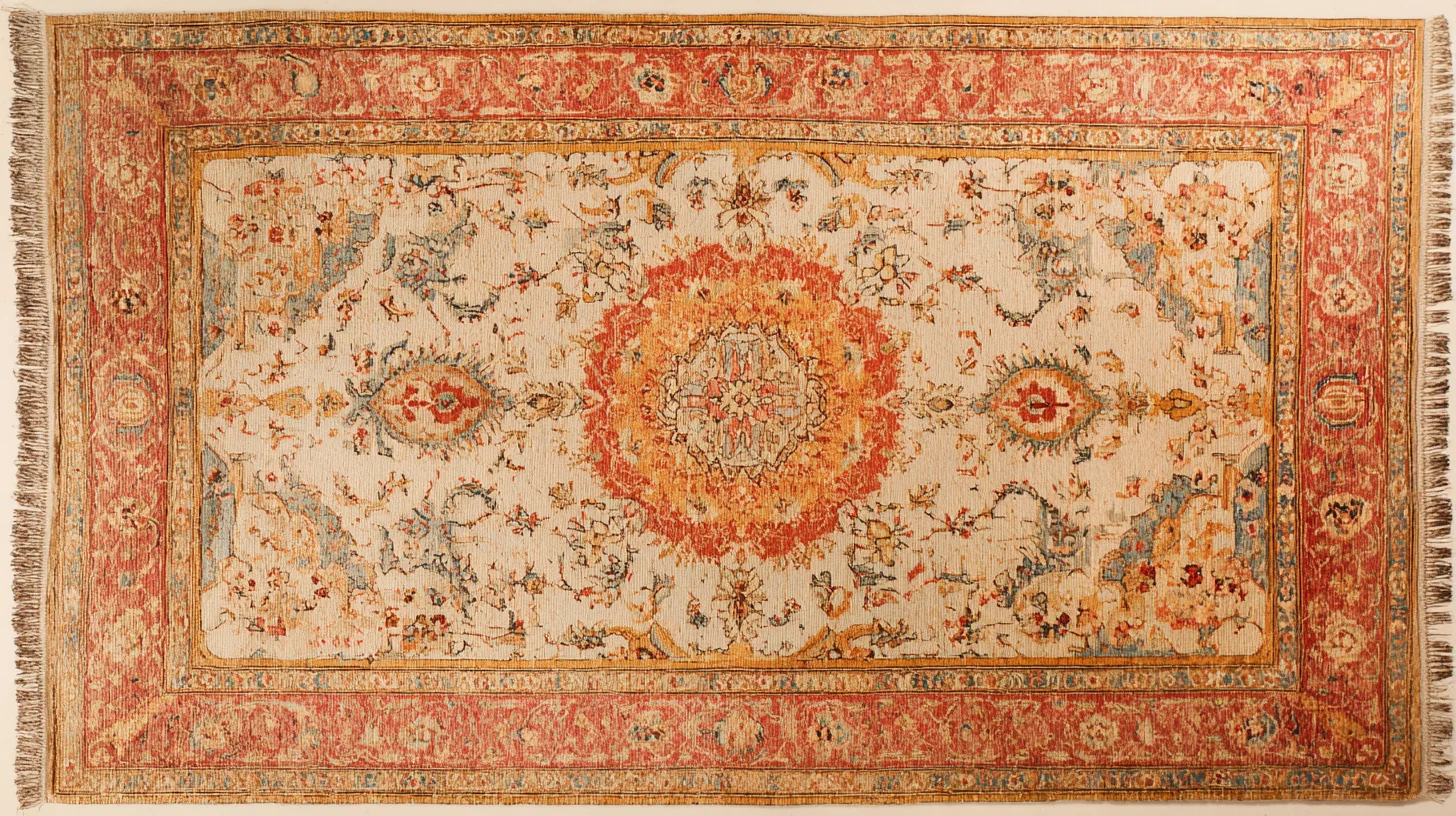
The ninth post in this arc treated the Hereke — a rug made not by a place but by an institution, a state manufactory weaving silk to a master cartoon at a fineness no village could approach. It was the arc’s high-water mark of discipline; everything in it was exact, and the exactness was the point. The Oushak is the same tradition’s other pole. It is Anatolian, as the Hereke was Anatolian, and it is tied with the same symmetric knot — but it was woven not by a court but by a town, and it is coarse where the Hereke was fine, loose where the Hereke was true, soft where the Hereke was brilliant. This is the tenth post in Reading the Antique Rug, and it treats the Oushak in the position the arc has reserved for the Anatolian town tradition — the western Turkish weaving with the longest documented continuity of any in this account, running back through the medieval “Holbein” carpets of the fifteenth century, and forward into the pale, large-scale decorator’s carpet that furnished the European and American interior for two generations.
The Oushak is the first rug in this arc that one must hold in two eras at once. There is a classical Ushak — the great medallion and star carpets of the sixteenth and seventeenth centuries, among the most important workshop carpets the Ottoman world produced, exported into Europe in such quantity that they appear, again and again, underfoot in European painting. And there is a revival Oushak — the soft, pale, large carpet of the late nineteenth and early twentieth centuries, woven for the decorating trade and beloved of it. The post must carry both, and the collector must learn to tell them apart; that double reading is one of the two load-bearing distinctions here. The other is the palette, and it is the thing one notices first.
The Specimen
An Oushak that one will most commonly encounter is a carpet of generous size — characteristically a room-size weaving and not a scatter rug, the size itself part of the type’s identity, for the Oushak loom and the Oushak market were both built around the large decorative carpet. The first thing to settle, before any motif is read, is the palette, because the Oushak palette is the type’s signature in the way the gül was the Tekke’s and the knot density was the Hereke’s. It is a soft palette, and softness here is not a euphemism for faded — it is the deliberate character of the dyeing. The grounds are apricot, a pale saffron-yellow, a chalky cinnamon, a soft and slightly greyed blue, an ivory going to cream; the red, when there is red, is a pale and dusty madder, a terracotta or a washed coral rather than the deep saturated red of a Persian field. One sets an Oushak beside a Heriz or a Kashan and the difference announces itself before a single motif is examined: the Persian rug is keyed to a strong red, and the Oushak is keyed away from it, into a register of warm pale neutrals that a decorator would later call, with some justice, the most accommodating palette in the whole of the Eastern carpet.
The design completes the specimen, and it is drawn at a scale to match the carpet. The classic Oushak composition is a large central medallion — or a pair of them, or a vertical row — set on a field that is, by the standards of Persian city weaving, conspicuously sparse: the medallion is large, the spandrels are large, and the ground around them is left comparatively open, scattered with a few large palmettes or arabesque sprays rather than packed with dense small ornament. The drawing itself is bold and somewhat loose. An Oushak medallion is not the taut, true, compass-drawn medallion of a Tabriz; it is a large archaic form, descended from medieval models, drawn with the slight irregularity and the generous hand of a town workshop rather than a court atelier. This looseness is not a fault. It is the aesthetic — the boldness of scale and the ease of the drawing are exactly what the type is admired for, and a reader who comes to the Oushak expecting the precision of the Hereke has brought the wrong instrument to the wrong rug.
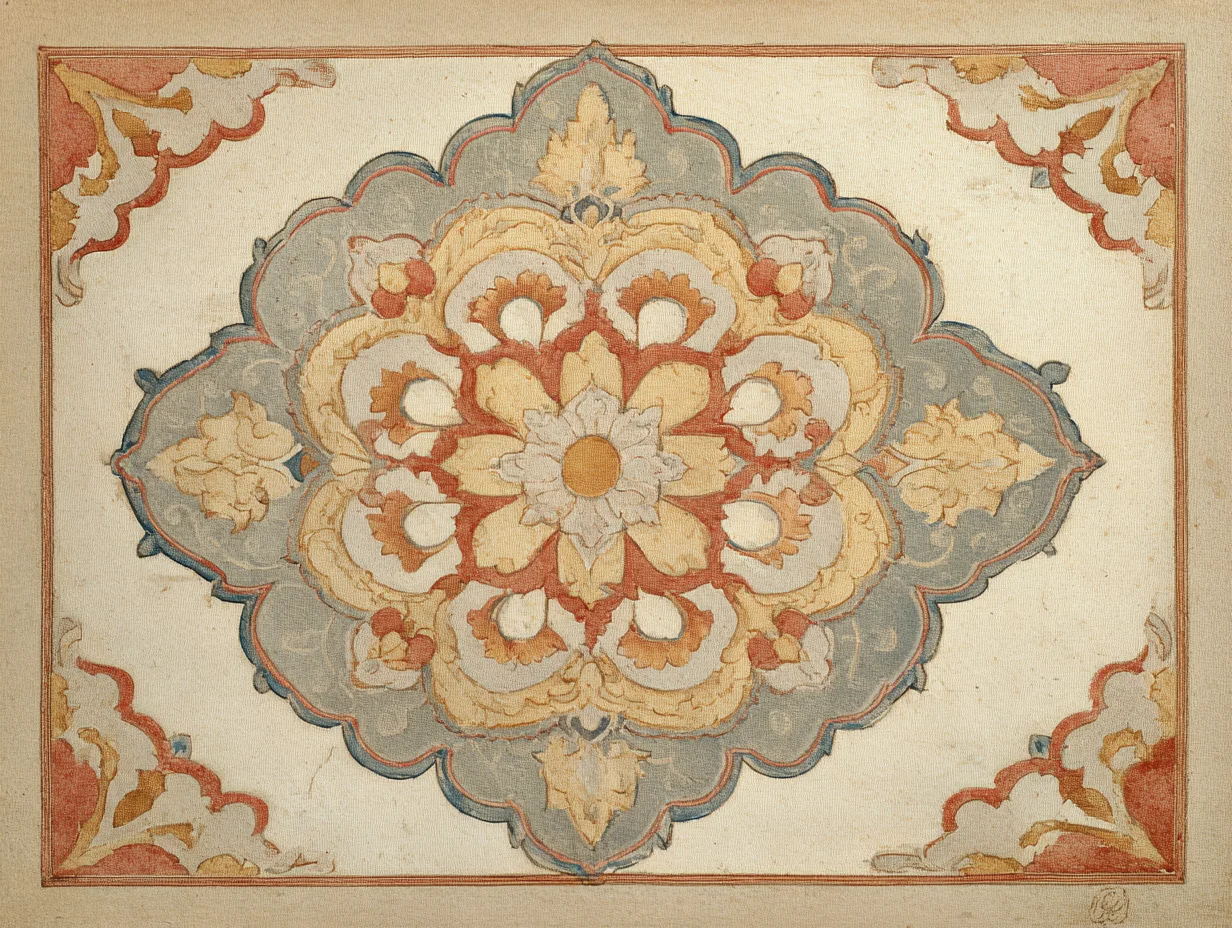
A close detail of an Oushak medallion — the large-scale archaic vocabulary descended from the medieval Holbein carpets, drawn at village-loom register.
The Evidence
The knot is where the Oushak corrects the assumption a reader carries in from Hereke, and the correction is the reverse of the one the Hereke post had to make. The Hereke was tied with the symmetric Turkish knot at a density past the reach of any village; one might suppose, having read that, that the symmetric knot is the fine knot. It is not — the knot has no fineness of its own, only the use a weaver puts it to. The Oushak is tied with the very same symmetric knot, looped around two warps and drawn down between them, the knot of the whole Anatolian tradition; but the Oushak weaver tied it coarsely. An antique Oushak runs at a moderate-to-low knot count, the count of a town workshop weaving large carpets at a working pace, and the back of the rug shows it plainly — a knot-grain that is open and nubbed and frankly coarse, nothing like the smooth cloth-like back of a silk Hereke. This is the load-bearing structural fact of the post, and it deserves the bluntness the Bidjar handle test was given: the Oushak is a coarse weave by design, and the coarseness is not a defect to be apologised for but a property of the type. The Oushak’s particular virtue — its scale, its boldness, its accommodating price — depended on a knot the weaver could lay down quickly.
The foundation is the second pillar, and it places the Oushak firmly on one side of the arc’s first structural axis. Where the Persian rugs of this account — Heriz, Tabriz, Kashan, Bidjar — were built on cotton warps, the Oushak is an all-wool weaving: wool warp, wool weft, wool pile, the whole structure of one fibre, as the Caucasian and Turkmen rugs were. One turns an Oushak over and the warp threads visible at the back are wool, and that single observation has already done a good deal of the attributing — it has carried the rug out of Persia. The wool foundation gives the Oushak a particular handle, too: a large Oushak is supple and rather loosely built, draping and settling in a way the stiff double-wefted Bidjar never would, and the practised hand reads that looseness as quickly as the practised eye reads the palette.
The third pillar is the dyeing, and it is worth being precise about, because the Oushak’s softness is the most imitated and least understood thing about the type. The pale palette is not, in a good antique Oushak, the result of fading — it is the result of how the wool was dyed and what it was dyed with. The Uşak district worked a dye tradition that ran to clear pale yellows, to soft apricots and salmons, to a madder used at a strength that gave terracotta and dusty coral rather than deep blood-red, and to blues kept light and slightly grey. The colours arrive pale; they were meant to be pale. The distinction matters because the later trade learned to manufacture softness — to chemically wash and bleach a more ordinary carpet down to a fashionable paleness — and a washed-pale rug is a different thing from a rug dyed pale. The first has had its colour taken out; the second never had strong colour to take. Reading that difference is the connoisseur’s discipline, and the post will return to it.
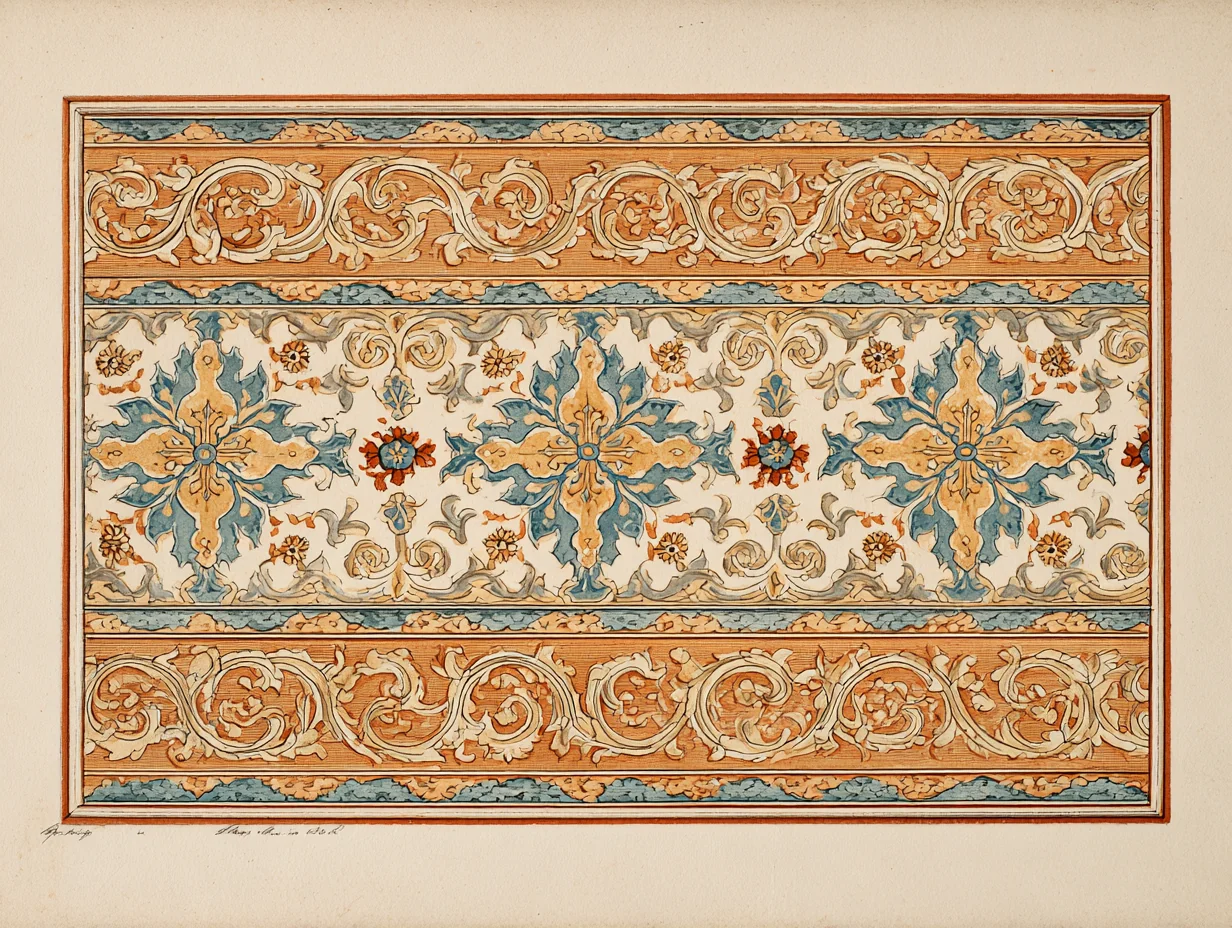
A close detail of an Oushak main border — large-scale star or cartouche repeat in the soft Anatolian palette.
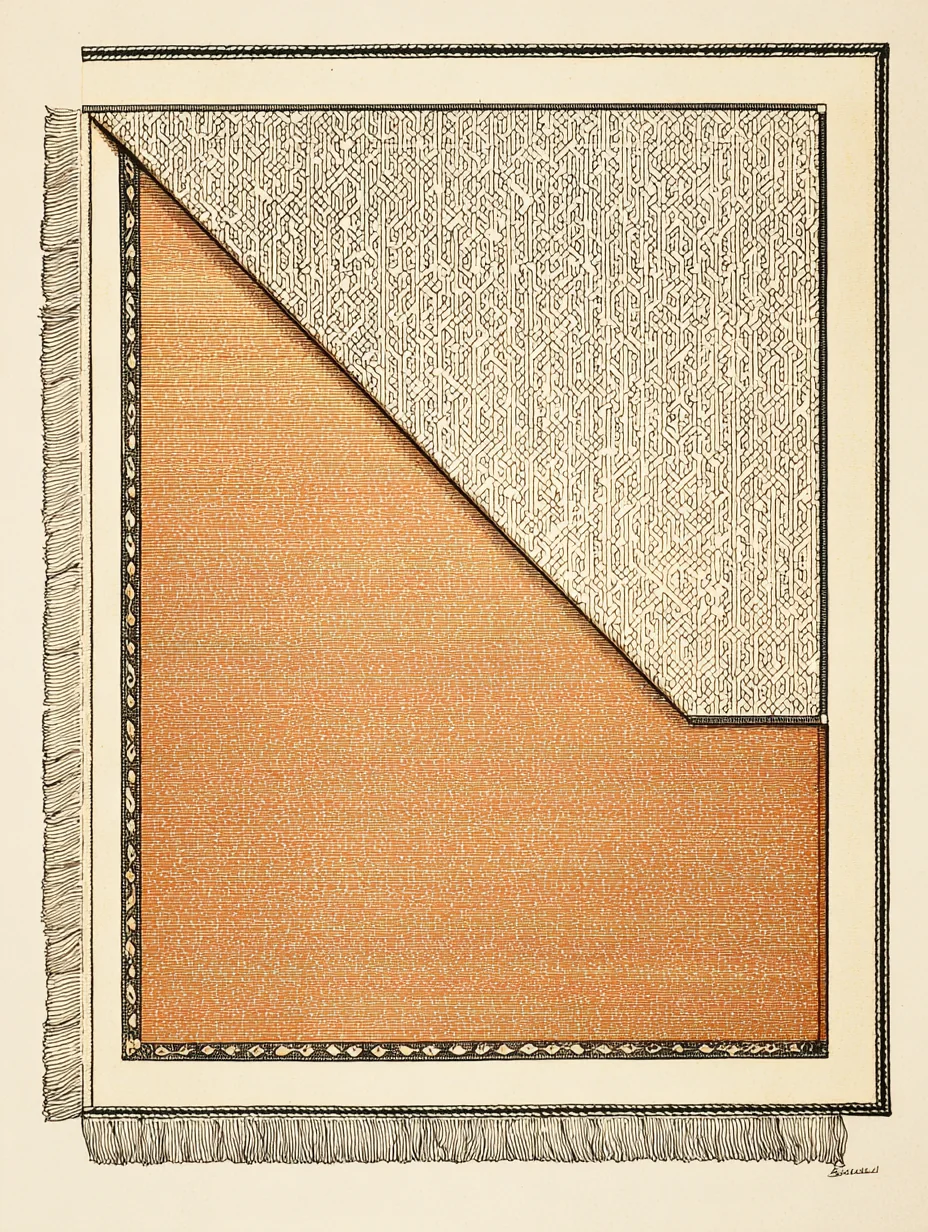
A close detail of the back of an Oushak rug — the symmetric Turkish knot, the wool foundation throughout, the village-loom regularity.
The Period
The Oushak takes its name from the town of Uşak in western Anatolia, inland from the Aegean coast, on the high country between Izmir and the central Anatolian plateau; and the town has been a carpet centre for as long as the Western record of Anatolian carpets exists at all. That record begins, in fact, not in Anatolia but in Europe, and not with a carpet but with a painting. The earliest Anatolian carpets one can date with confidence are dated because European painters of the fifteenth and early sixteenth centuries put them into their pictures — laid them across tables, hung them from windows, set them beneath the feet of saints and patrons — and the carpets in those paintings have been named, by long convention, for the painters who recorded them. The small-pattern and large-pattern geometric carpets of the fifteenth century are the “Holbein” carpets, after Hans Holbein the Younger, in whose portraits they recur; a related group of vine-and-arabesque carpets is the “Lotto” carpets, after Lorenzo Lotto. These are the medieval Anatolian tradition, and it is out of that tradition — the same western Anatolian district, the same symmetric knot, the same bold geometric instinct — that the classical Ushak workshop emerged. The Oushak does not begin in the nineteenth century. It begins in a Holbein portrait.
The classical Ushak carpets of the sixteenth and seventeenth centuries are the apex of the tradition and one of the high achievements of Ottoman weaving. Two great types define the classical period: the medallion-Ushak carpets, with a single large central medallion and quartered medallions in the corners set on a deep red or deep blue field; and the star-Ushak carpets, with a field repeat of large eight-pointed stars alternating with smaller lobed medallions. These were workshop carpets — large, ambitious, woven in quantity — and they were exported into Europe on a scale that nothing else in this arc matches, furnishing the great houses of Italy, the Netherlands, and England, and appearing in the inventories of European courts and the canvases of European masters for two hundred years. It is worth holding this fact against the Oushak’s modern reputation as a gentle decorator’s carpet, because the classical Ushak was, in its day, the most important commercial carpet in the world. The town has been weaving for the European interior, in other words, for some five centuries — the modern Oushak trade was not an invention but a resumption.
The resumption is the second era, and it is the one the collector meets most often. Through the eighteenth and earlier nineteenth centuries the Ushak workshops continued, but their grand classical period had passed. Then, from roughly the 1870s and 1880s, the European and American decorating trade discovered that it wanted exactly what western Anatolia was best placed to supply — a large carpet, boldly and simply drawn, woven in a soft pale palette that would sit quietly under furniture rather than competing with it. The Oushak revival answered that want. The looms of Uşak and the surrounding district turned out room-size carpets in apricot and saffron and washed coral, in the loose large-medallion manner, in great numbers, and they became one of the staples of the interior trade on both sides of the Atlantic. The “decorator’s Oushak” — the soft, pale, large, late carpet — dates almost entirely from this revival, from the last decades of the nineteenth century into the first decades of the twentieth.
For the collector the period distinction is therefore sharper here than in any prior post, because the two eras are genuinely different objects. A classical-period Ushak — a sixteenth- or seventeenth-century medallion or star carpet — is a museum rarity, a documented antiquity of the first importance, and almost no one buying a rug will ever be choosing one. A revival Oushak is a decorative antique of the late nineteenth or early twentieth century, common enough to furnish a house, and admired on its own honest terms. Both are Oushak; both descend from the Holbein tradition; but they are separated by three hundred years and by a difference of purpose. The connoisseur reads, in nearly every practical case, for the best of the revival — and reads for it knowing the great classical tradition standing behind it.
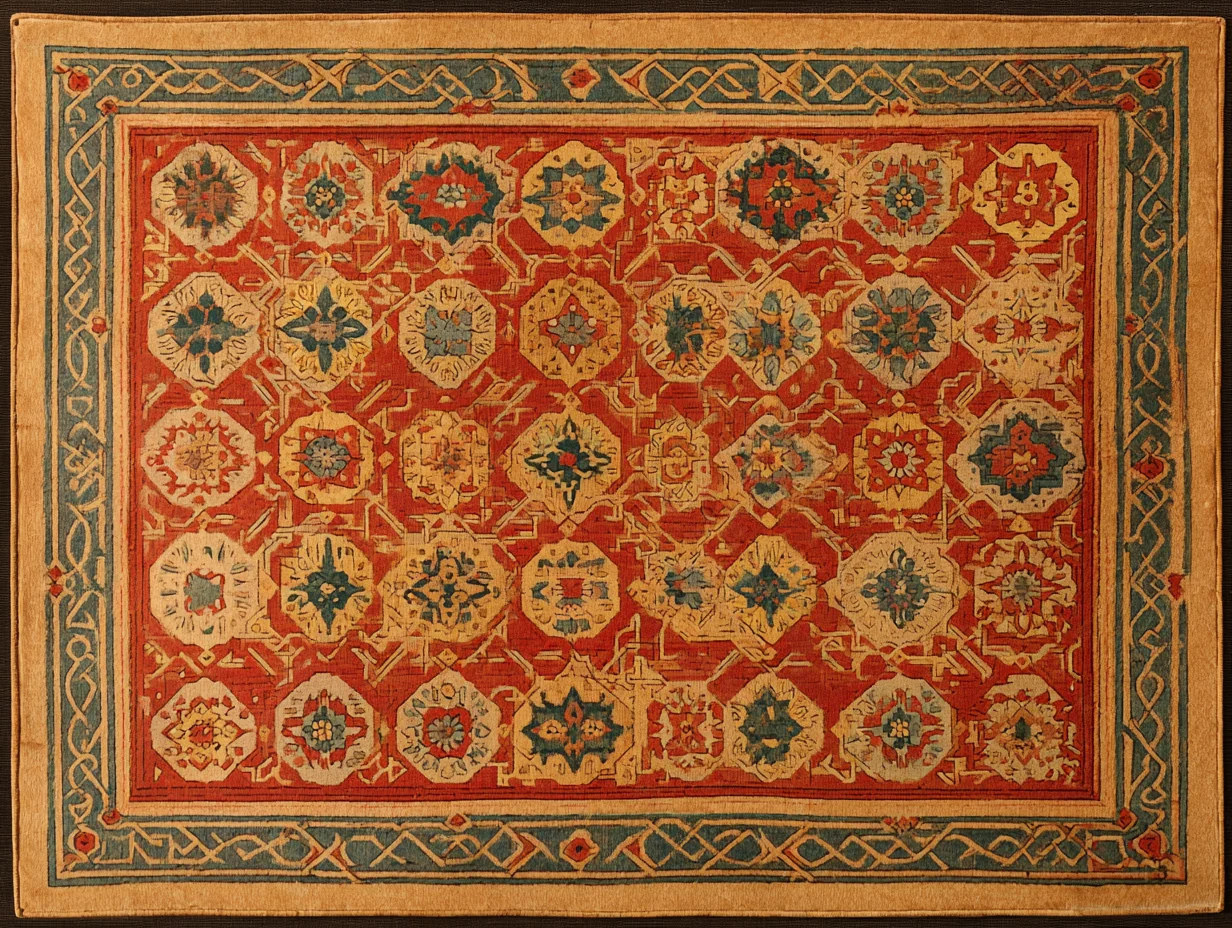
A 15th-c ‘Holbein’ carpet — the medieval Anatolian tradition named for the painter Hans Holbein who depicted such carpets in his portraits. The Oushak tradition descends directly from this medieval village vocabulary.
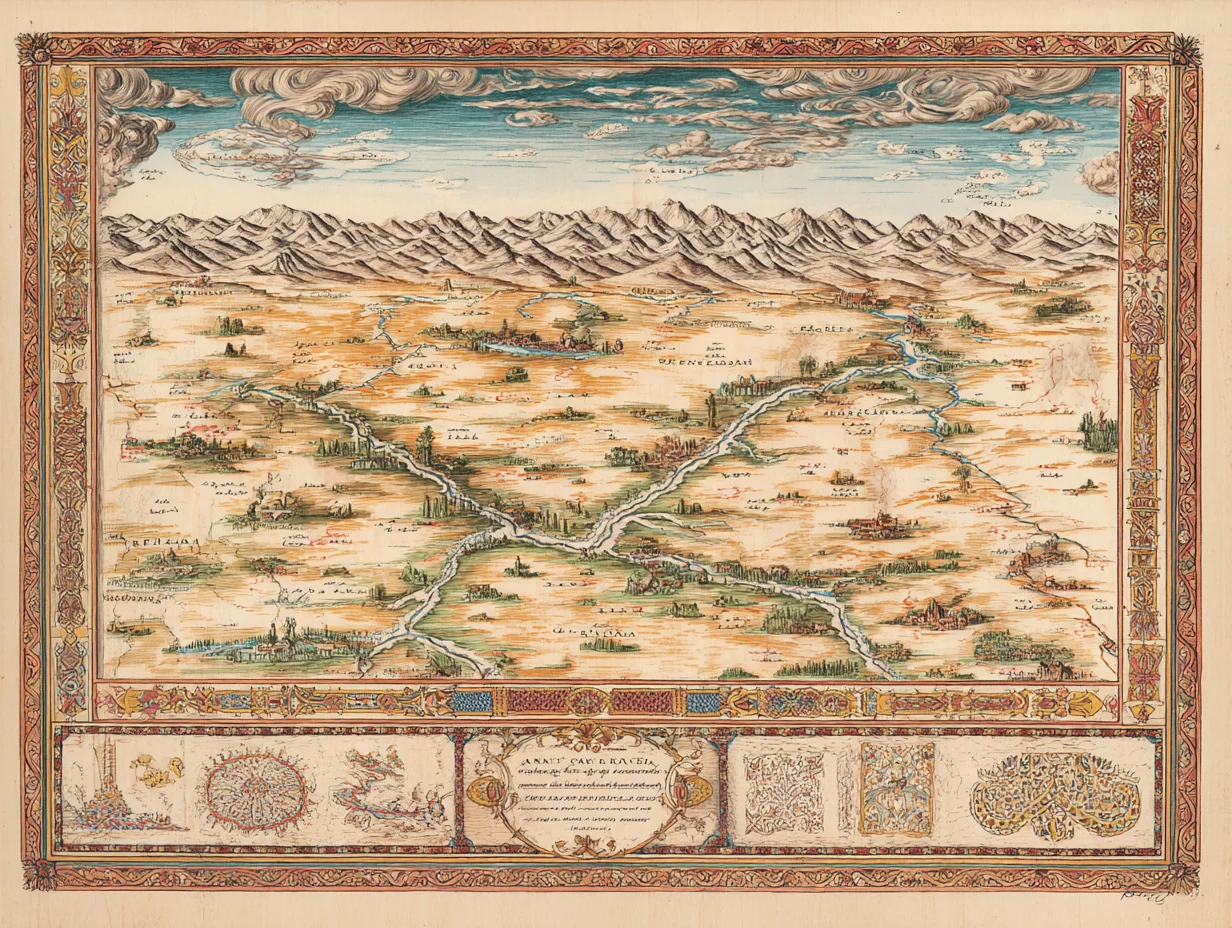
A page from a Victorian connoisseur’s portfolio on the western Anatolian district — district map of western Turkey locating Oushak, Bergama, Ghiordes, Ladik, Konya; archetype drawings of each sub-type.
What It Is Not
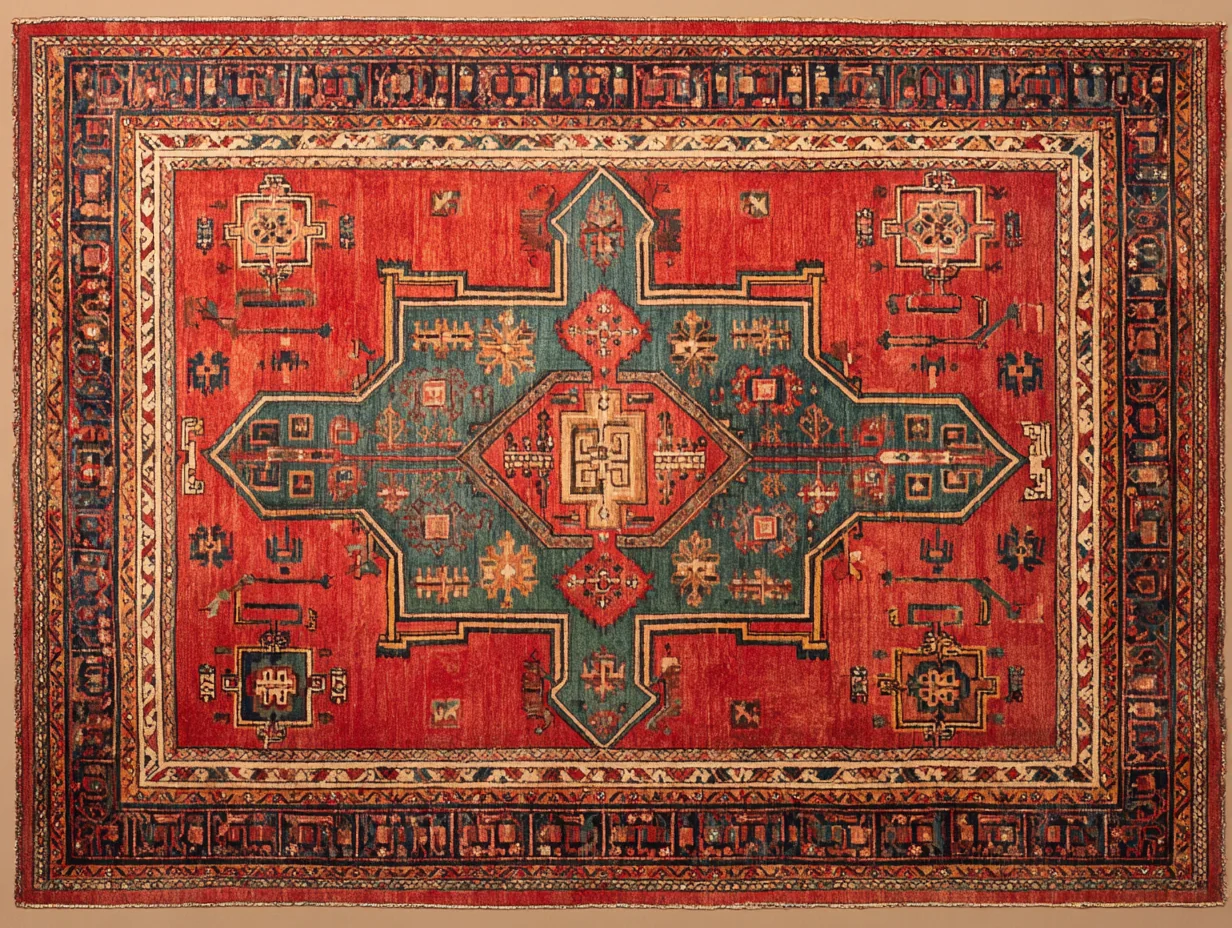
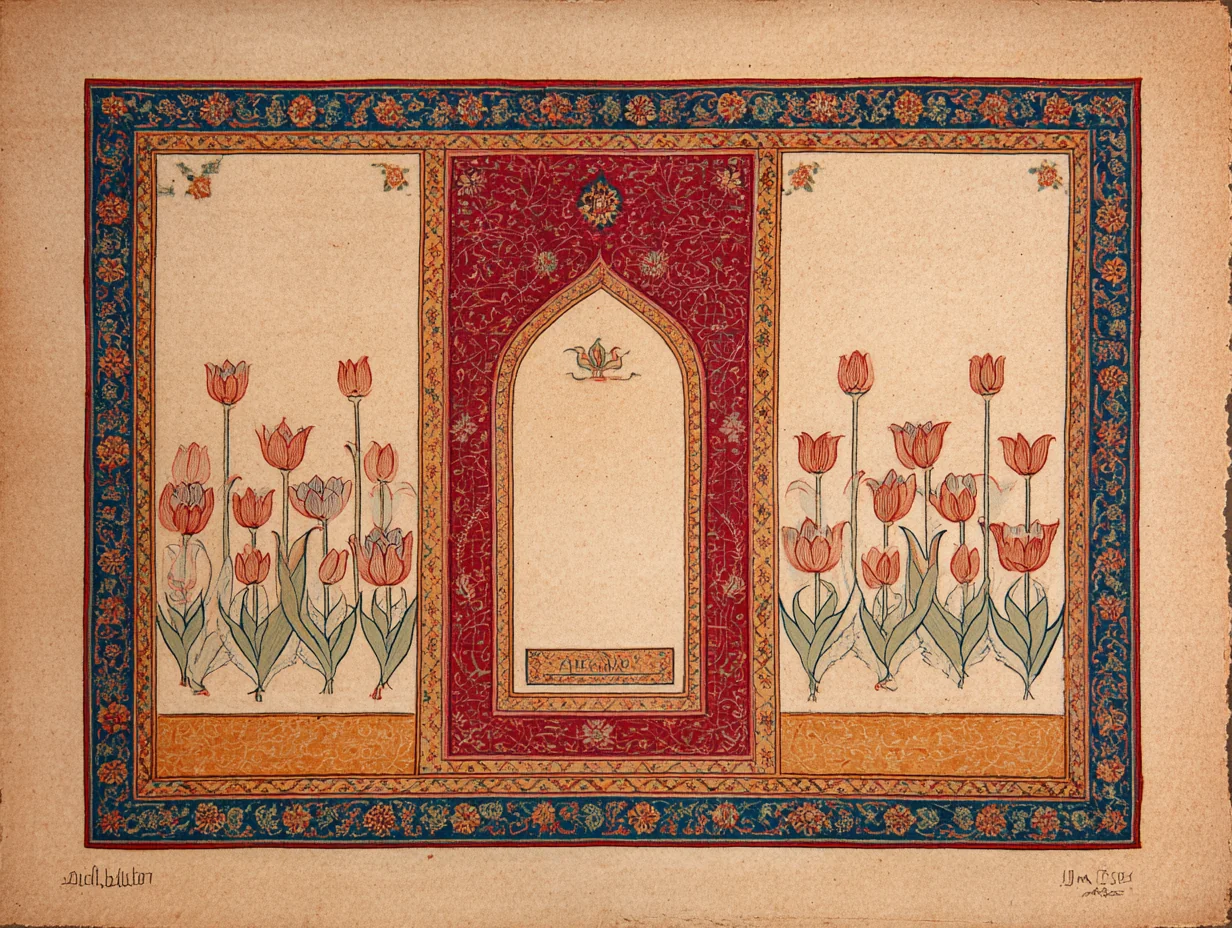
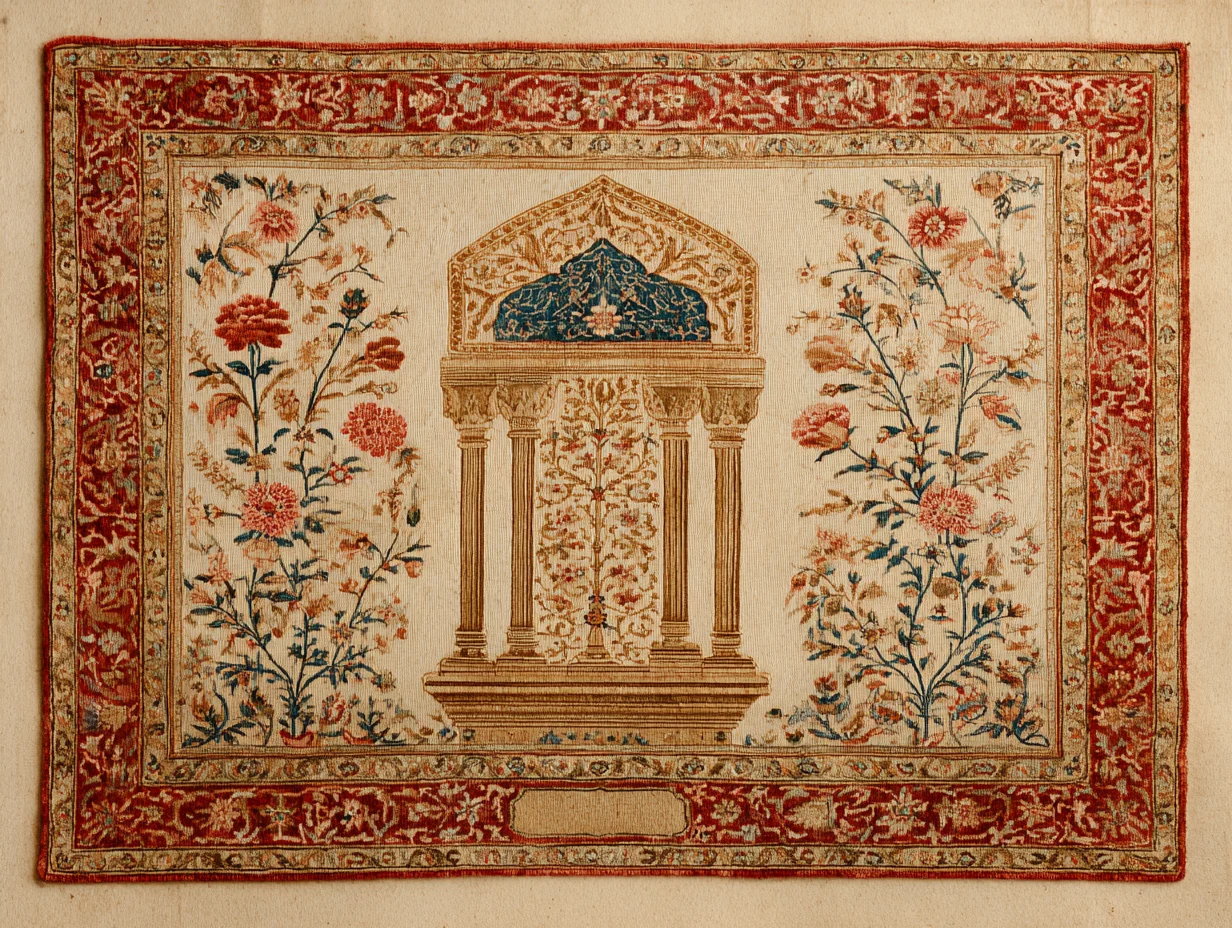
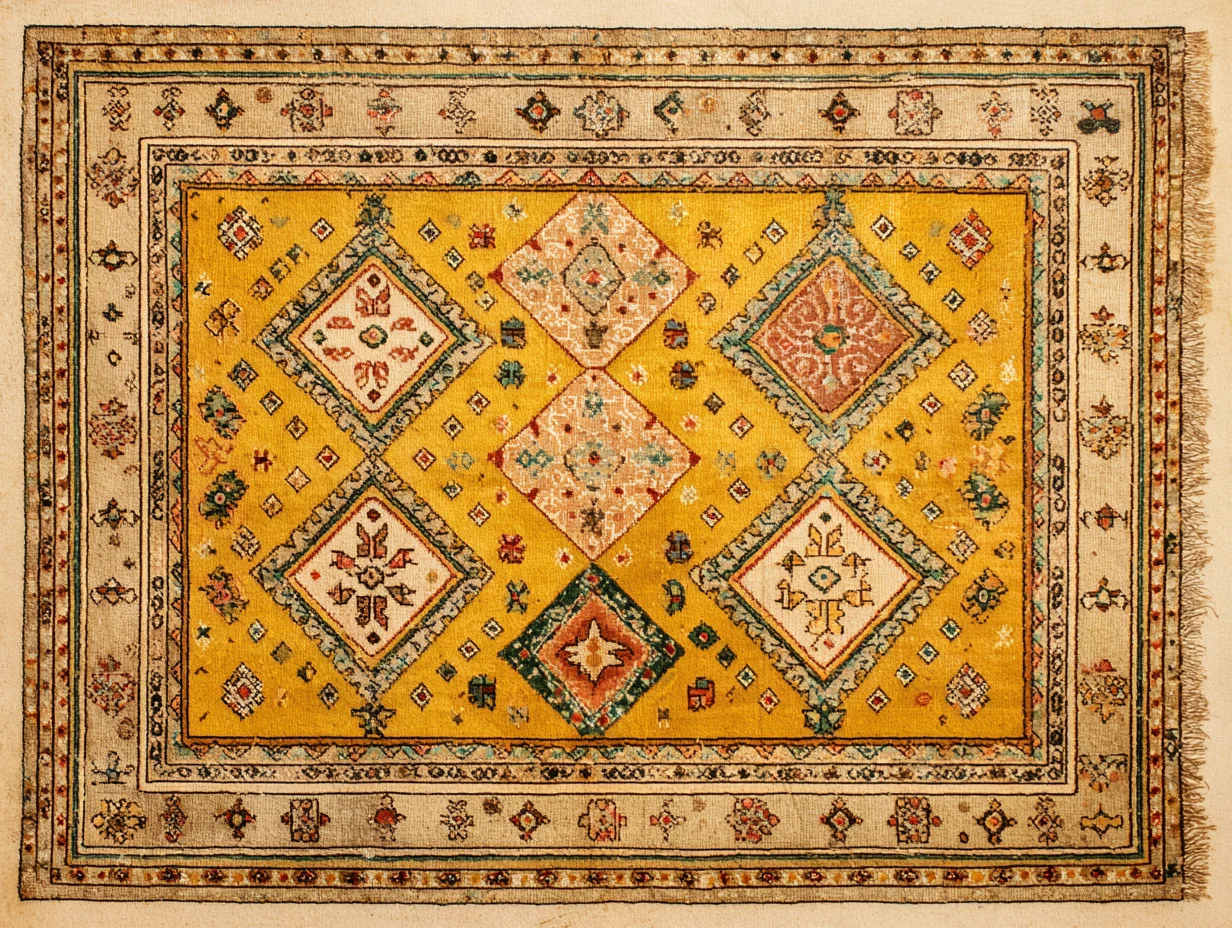
The four types set against the Oushak are all Anatolian and all tied, like the Oushak, with the symmetric Turkish knot — so the knot will not separate them, and the practised eye separates them instead by reading scale, format, and palette together. This is the working skill for the Anatolian town tradition, and it is worth stating as plainly as the gül test was stated for Tekke: with an Anatolian rug, one attributes by how large the carpet is, how large the drawing is, and how soft the colour is, because all four of these neighbours share the knot and the wool.
A Bergama is the nearest geographical neighbour and the most instructive contrast. Bergama, the old Pergamon, lies in the same western Anatolian country, weaving the same symmetric knot in the same all-wool structure; but the Bergama is a village rug in the strict sense — a smaller, near-square format, woven for use rather than for the room — and its palette runs the opposite way from the Oushak’s. Where the Oushak is keyed to soft pale grounds, the Bergama is keyed to a deep, strong, saturated red, with bold geometric medallions in dark blue and ivory. The rule of thumb: a large soft-pale carpet is an Oushak; a smaller near-square rug on a strong red ground, from the same district, is a Bergama.
A Ladik moves the comparison from format to function. Ladik, in the central Anatolian country near Konya, is known above all for its prayer rugs — single-direction pieces carrying a niche, and famous for a distinctive band of stylised tulips, panel-drawn, set above or below the niche. The Ladik is a directional rug built around a niche; the Oushak is a non-directional carpet built around a medallion. The rule of thumb: a niche and a row of tulips is a Ladik prayer rug; a centred medallion on an open field is an Oushak.
A Ghiordes is the contrast of fineness, and it stands to the Oushak rather as the Hereke stood to the Sivas. Ghiordes — the town that gave its name, in the Western literature, to the symmetric knot itself — was a fine Anatolian workshop centre, and its great production was the prayer rug, woven at a considerably higher knot density than any Oushak, with crisp well-drawn niche-and-column compositions. The rule of thumb: a fine, crisply drawn Anatolian prayer rug is a Ghiordes; the Oushak is the coarser, larger, looser town carpet, and makes no claim on Ghiordes fineness.
A Konya carries the comparison eastward, off the western district altogether, into central Anatolia. Konya — among the very oldest of all Anatolian weaving centres — produced rugs in a yellow-rich palette that can, at a glance, suggest the Oushak’s warmth. But the Konya drawing is a smaller-scaled, more purely geometric village vocabulary, and the format is the smaller village format rather than the grand Oushak carpet. The rule of thumb: a small central-Anatolian rug in a geometric village manner is a Konya; the Oushak is the large western-Anatolian carpet, and its medallion is the archaic large-scale form descended from the Holbein tradition.
The pattern across all four is the working value of the post. One does not attribute an Anatolian rug by its knot, for the symmetric knot is common to the whole region; nor by the mere fact of wool, which is equally common. One attributes it by reading scale and format and palette together — and by recognising that the Oushak’s particular combination, the large carpet, the large loose medallion, and the soft pale ground, is shared by none of its neighbours.
What One Looks At
The practical discipline of identifying an Oushak comes down, as in the prior rug posts, to a short ordered checklist — and as the Hereke post began with the move that does the most work for a court rug, this one begins with the move that does the most work for a town carpet. That move is to read the palette.
One looks first, and principally, at the colour. An Oushak offers a soft warm palette — apricot, pale saffron-yellow, chalky cinnamon, soft greyed blue, ivory and cream, a madder used pale into terracotta and dusty coral — and the absence of a strong saturated red is itself half the attribution. A large carpet keyed to warm pale neutrals, with no deep Persian red anywhere commanding the field, is pointing hard toward Oushak before a motif is read. But one reads the palette with the period question alongside it: a colour that is soft is right; a colour that has been washed thin, that shows a strong dye stripped pale by chemical bleaching, that reads as paleness imposed rather than paleness intended, is the mark of a later trade carpet dressed up for the decorator, and not the same thing as a genuine Oushak dyed pale at the dye-pot.
One looks next at the scale and the drawing. The Oushak is a large carpet drawn large — a generous central medallion, or a row of them, on a comparatively open and sparse field, with the ornament bold and the hand frankly loose. One does not look here for precision; one looks for the archaic large-scale medallion descended from the Holbein vocabulary, and for the easy generous drawing of a town workshop. A small rug, or a rug of taut compass-drawn precision, is not an Oushak whatever its colour.
One looks at the structure. The Oushak is all wool — wool warp, wool weft, wool pile — so the warp seen at the back is wool, which carries the rug out of Persia; and the symmetric Turkish knot is tied coarsely, so the back reads open and nubbed rather than fine. The handle confirms it: a large Oushak is supple and loosely built, and drapes where a stiff Persian city carpet would stand. The coarseness is not graded against the Hereke and found wanting — it is read as the correct and intended property of a large town carpet.
And one looks, last, for the era, holding the two Oushaks apart. The overwhelming majority of Oushaks one will ever handle are revival carpets of the late nineteenth and early twentieth centuries — decorative antiques, admired honestly for what they are. The classical Ushak, the sixteenth- or seventeenth-century medallion or star carpet, is a museum object and is read for in museums. The connoisseur places the rug in its era first and grades it within that era second, and does not mistake a good revival carpet for a classical antiquity, nor disparage it for failing to be one. The Oushak is not a court’s rug and not a tribe’s. It is a town’s rug — the western Anatolian carpet that has furnished the European room for five hundred years, and the soft pale palette in the field is the measure of a tradition that learned, long ago, exactly what the West wanted underfoot.
The next post in the rug arc will be either Isfahan — to extend the central Persian court tradition into its silk-warp, ivory-ground apex — or Karabagh, to return to the Caucasian region with the burgundy and French-rose register. The choice will depend on what photographic material is available at the time of writing.