I had gone up into the hills to write the obituary of a craft, and I will confess at the outset that I went in the comfortable certainty of finding it already dead. That is the sort of errand a man of my profession is sent upon. A house in the city had asked me to set down, while there was still a hand to show me, the manner in which carpets had once been knotted entire by the human body — every loop tied, every weft beaten home, every colour carried across the warp by fingers that tired and erred and went on. They wanted it for the catalogue. They wanted, I think, to be able to say that they had been thorough; that when the thing was gone there would be a paragraph, with a name and a date, to prove it had been there. I was not unwilling. The pay was fair, the season was fine, and I had a private fondness for errands that end in a churchyard, since they ask nothing of the future and a great deal of one’s powers of description.
The village, when I reached it, lay along the side of a valley in the way that such villages do — as though it had been spilled there rather than built, and had simply declined, over some centuries, to be tidied away. I will not give its name. The name would mean nothing to the reader, and it would do the place no service to be known as the village where the thing I am about to relate took place. It is enough to say that it was high, and quiet, and that the wind came down the valley in the afternoon with a sound like a slow indrawn breath, and that there was a great deal of sky.
They directed me, without much interest, to the last house on the upper lane. The woman I had come to see was called — I will call her Mira, which was near enough to her name to satisfy my conscience and far enough to keep my promise. She was old. I had been told she was old, and had formed, on the strength of it, the picture one forms: something bent and clouded and gentle, a figure more relic than person, to be handled with the careful tenderness one brings to things that may not last the visit. The picture was wrong in every particular except the count of her years. She met me at the door with a level look, asked me what the house in the city wanted, heard my answer to the end without once helping me through it, and then stood aside to let me in with the air of a woman admitting a draught she had decided to tolerate.
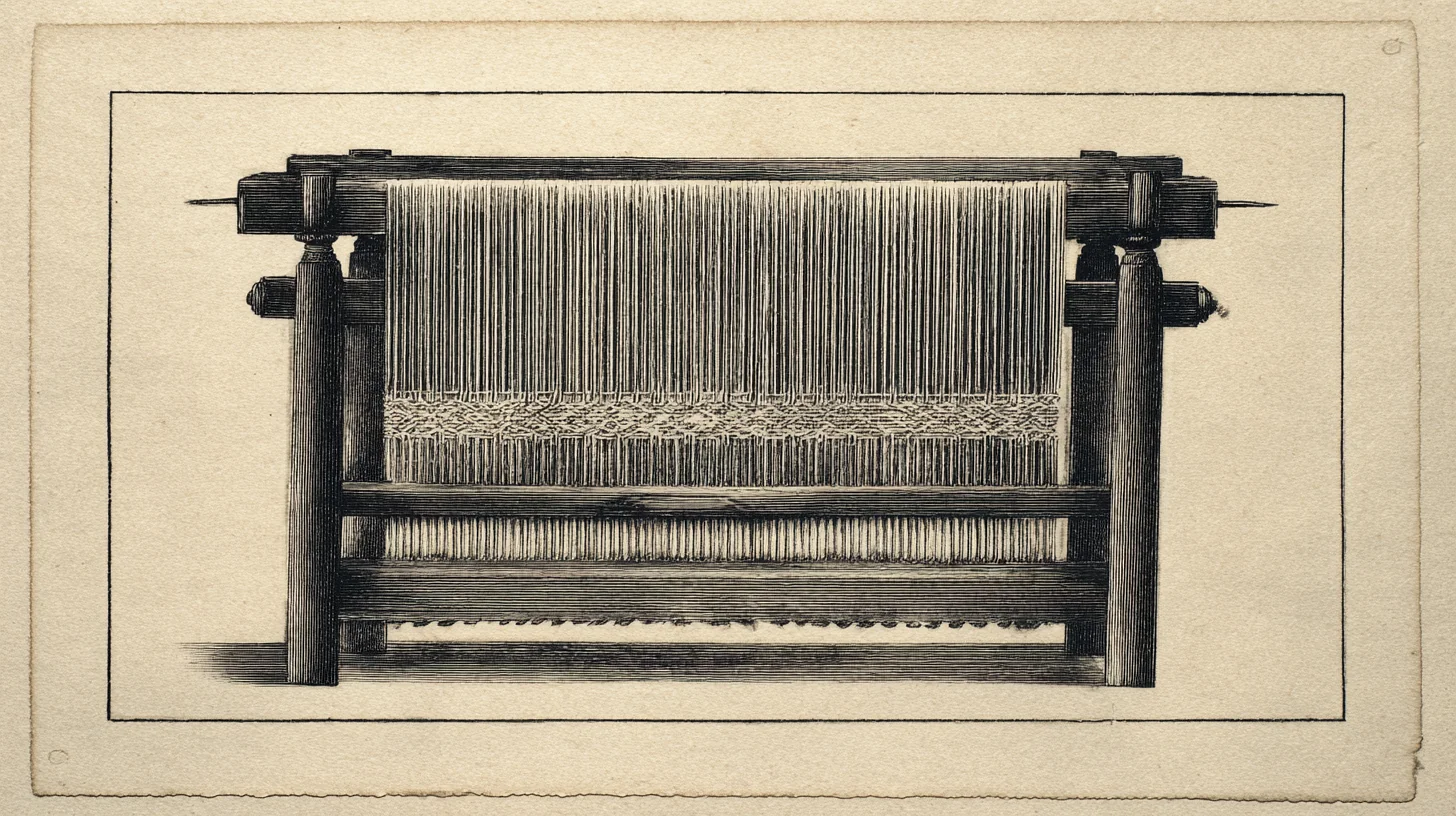
The room beyond was the whole of the house, very nearly, and the loom stood in the best of the light. I had seen looms before — in museums, dressed and labelled and silent — and I will say that I had not understood until that moment that they were silent because they were dead. This one was alive. It was a great upright frame of dark wood, worn pale along every place a hand or a thread had passed ten thousand times, and the warp ran down it taut and white like the strings of some instrument built for a music too slow for the ear. A carpet stood half made upon it. Perhaps a third of it had come into being. The rest was that white nothing, waiting.
I asked if I might watch her work, and she said that watching was what I had come for and I had better get on with it.
So I got on with it. I drew up a stool, and I watched, and for the better part of two days I did very little else.
What the Hand Leaves
It is not my purpose here to set down the whole of what I learned in that room. The motions themselves I will pass over quickly. She worked from the bottom of the carpet upward, a single horizontal line at a time, and each line was made of several hundred knots, and each knot she tied with her fingers alone — a loop of dyed wool about two threads of the warp, drawn down, the ends cut to a stubble with a small curved knife that lived in her right hand as though it had grown there. When a line of knots was complete she beat it down hard against the finished work below with a heavy iron comb, two strokes, three; and then she passed a weft thread across, and beat that; and then began the next line. A carpet of any size is some hundreds of such lines. The arithmetic of it is quietly appalling, and I worked it out on the second afternoon and then rather wished I had not.
What held me was not the labour but a thing she said on the first evening, when she had stopped for the light and we sat with the door open to the cooling valley.
I had asked her — clumsily, I think, for I had not yet found the shape of my questions — whether it did not trouble her that the carpets were no longer wanted. For I knew, as everyone in the trade knew, that her work no longer sold as a floor-covering sells. It sold, when it sold, as a curiosity. There were people in the cities who would pay a considerable sum for a carpet knotted by a living hand, and they paid it, every one of them, for the same reason a man pays for a thing under glass: because it was the last of something, and they wished to be the kind of person who owned the last of something. They did not walk on them. I had been in their houses. The carpets hung on walls, lit carefully, with a small card beside them.
She did not answer me at once. She looked at the half-made carpet on the loom for a while, and then she said that no, it did not trouble her, or not in the way I meant, and that I had asked the wrong question because I did not yet understand what I was looking at.
“The machine,” she said, “can make the picture. I have seen it. It makes the picture better than I make the picture — straighter, and the colours truer, and not one knot out of its place. If a man wants the picture, he should buy the machine’s carpet and save his money, and I would tell him so to his face.”
I said that this seemed to me a hard thing for her to have to grant.
“It is not hard. It is only true.” She turned her hands over on her lap, palm up, and looked at them, and I looked at them too. They were not beautiful hands. They were a labourer’s hands, thick at the knuckle, the right forefinger grooved where forty years of knife and thread had worn a channel in it. “But the picture is not the carpet,” she said. “Come here in the morning, in the early light, and I will show you what the carpet is.”
The Proof and the Life of It
She showed me in the morning, and I will try to set it down as she set it out for me, because it is the hinge of everything that came after.
She had me kneel beside the finished third of the carpet and look along its surface, not down at it but along it, with the low sun raking across the pile. And once I had my eye to it I saw what she meant me to see. The carpet was not uniform. It could not be. A line of knots tied in the freshness of the morning was tied a shade more tightly than the same line would have been tied in the worn-out last hour of the day, and so the pile stood at a fractionally different height, and the light caught it differently, and there ran across the whole work — faint, irregular, but quite unmistakable once one had been taught to find it — a banding, a tide-mark of the days. Here the red had been dipped from one dye-lot and here from the next, and the two reds were brothers but not twins, and the join between them was not a line but a slow uncertain country. A flower in the border on the left was not the precise sister of the flower on the right; her hand had wandered, by the breadth of a knot or two, and the wandering was the record of a living attention that had drifted and recovered itself a thousand times across the years of the work.
“That,” she said, “is the hand. The picture is the same on every carpet of this pattern. The hand is on this one only. A man who knows carpets does not pay for the picture. He pays for the hand — for the proof that a person was here, that a body sat at this frame and was tired and was not tired, and grew cold towards evening, and tied this knot a little wrongly because that morning the news had been bad. The machine gives him the picture with no hand in it. It is a dead even thing. And a dead even thing he may have for nothing, near enough, and welcome.”
I asked her — and I asked it gently, for I thought I already knew the answer and thought the answer was a comfortable one — whether the machine could not simply be made to put the wandering in. To copy the unevenness along with the pattern.
She smiled at that. It was the only time in two days I saw her smile, and it was not an unkind smile, but it was the smile of a person hearing an old objection from someone too young to know it was old.
“They have tried,” she said. “Of course they have tried. They make the machine shake a little, here and there, so that the knots are not all of one height. But the shaking is not the hand. The hand is not shaking. The hand is deciding — every knot, all day, ten thousand decisions, and not one of them random, and not one of them the same. They cannot put forty years into a machine. They have the picture. They will never have the years.” She took up her knife. “I have thought about this a great deal, sitting here. It is the thing that lets me sit here. They have taken the work and they have taken the wage, and they are welcome to both, and I do not grieve for either. But the one thing they cannot take is the proof that I was the one who was here. That is mine. That stays mine. A man may copy what I made. He cannot copy that I made it.”
I wrote that down. I remember writing it down, in the failing light, and thinking that I had my obituary’s last paragraph and that it was a fine one — elegiac, and dignified, and false in no particular. The craft would die, but it would die holding something the machine could not reach for. It is a comfortable shape for a story, and I was glad to have found it, and I went to my bed that night well pleased with the day.
I would not have the reader think me a fool for being pleased. I would only have him notice how much a man will build, and how quickly, upon a foundation he has not thought to test.
The Carpet They Sent Back
The thing I must now relate I did not see. It had happened some eight months before my visit, and Mira told it to me on the last evening, plainly, in answer to no question of mine — told it, I came to understand, because she had let me spend two days building my comfortable paragraph and had decided, for reasons I have never been certain of, that I ought not to be allowed to carry it home unbroken.
The house in the city — the same house, I believe, that later sent me — had written to her the previous year. They were, they said, great admirers of her work. They wished, with her permission, to do it an honour. They proposed to take one of her finest carpets, an old one, a carpet she had made as a younger woman and kept and not sold, and to place it before the machine — the new machine, the good one — so that the machine might study it and produce a reproduction. The reproduction would hang beside the original in their gallery, the hand beside the not-hand, that the public might see the difference and understand what was being lost. It was to be, the letter said, a tribute. They asked her to name a fee, and the fee they named back was generous, and she agreed. She told me she agreed gladly. She had wanted, she said, to see the two side by side. She had wanted the public to see it. She had been as sure as I had been — surer, for she had forty years of being sure — that the comparison could end only one way.
They sent the carpet down to the city. They kept it some weeks. And then they sent it back, and with it they sent the machine’s copy, so that she might see the tribute for herself before it was hung.
She unrolled them both on the floor of that room, side by side, in the good morning light, and she knelt down between them with her knife-grooved finger ready to find the place where the machine had failed.
She did not find it.
She told me this without any tremor at all, which was somehow worse than if she had wept. The copy was not a dead even thing. The copy had the banding of the days in it — the tide-marks, the place where one dye-lot gave way to its brother, the flower in the left border that did not quite answer the flower on the right. It had the wandering. It had the hand. She knelt between the two carpets for the better part of an hour, she said, moving from the one to the other, and she could not, with all her forty years, with her eye laid flat along the raking light, tell with any confidence which was the carpet she had made.
“I told myself,” she said, “that they had cheated. That they had sent me back my own carpet twice and kept the copy, to spare me. It would have been a kindness, and I had half a mind to write and thank them for it.” She had found, at last, the proof that they had not. In one corner of her own carpets, all her life, she had tied a knot of a particular dark thread — not a signature anyone would notice, only a thing she did, a private full stop. It was in the one carpet. It was not in the other. The machine had reproduced everything a hand could leave except the one mark she had put there on purpose; it had copied every accident and missed the only intention. So she knew which was hers. She knew it by the one knot she had told no one about. By nothing else in all those hundreds of thousands of knots could she have known it at all.
What the Machine Had Studied
I asked her — because I am, after all, a man who writes things down for a living, and even then, even in that room, some part of me was reaching past her grief for the mechanism of it — I asked her how it had been done. How the machine had learned the thing she had been so certain it could never learn.
She knew. She had written to them, after, and they had told her, kindly enough, in the way that men are kind when the kindness costs them nothing. The machine had not been taught the wandering of her hand. No one had sat down and instructed it in the price of a tired afternoon. It had simply been shown carpets — hand-knotted carpets, ten thousand of them and more, every one that the house and its friends across the trade could photograph and measure and feed to it. Ten thousand hands, and the tens of thousands of small wanderings those hands had left, and out of all of them together the machine had drawn — not a rule, they were careful to say it was not a rule — but a sense, a learned expectation, of how a human hand drifts and tires and recovers and errs. It had studied the irregularity of an entire vanished profession. And having studied it, it could now commit irregularity — not hers, but a true and convincing irregularity, a wandering indistinguishable from the real thing because it had been distilled from ten thousand real things.
“They were proud of it,” she said. “I want you to understand that. The man who wrote to me was proud. He thought he was telling me something fine. He said —” and here she stopped, and got the words exactly, the way a person gets exactly the words that have been turned over and over in the dark — “he said that the machine had learned to honour the hand. That it could now produce, he said, a more human carpet than a tired old woman could be expected to produce on a bad day. Because it never had a bad day. It had only the ten thousand best understandings of what a bad day does.”
She was quiet for a while after that. The wind came down the valley with its long slow breath, and the light in the doorway went from gold to grey.
“I had thought,” she said at last, “that the work was the thing they were taking, and that the proof was the thing I would keep. I had it the wrong way round. The work was always going to go; I had made my peace with the work. It was the proof I could not keep. They have not only made the picture better than I make it. They have made the hand better than I make it. They have studied me — me, and all the ones before me — and they can do me now more like myself than I can do myself. There is a copy of my hand in that machine, and it does not get cold towards evening, and it does not have forty years in it, and no one looking will ever be able to tell, and it does not matter that no one will ever be able to tell. That is the part I have not been able to get past. It does not even matter.”
The Last Morning
I left the next morning. I had what I had come for, and a good deal that I had not come for and would have been glad, by then, to do without.
She was at the loom when I came to make my goodbyes. I had half expected — I will be honest about it — to find the loom still and the warp bare, and to have to write that too into my paragraph, the final tableau, the old woman who had laid down the knife at last. It would have made an ending. But the loom was not still. She was working. The carpet on it had grown by a hand’s breadth in the night, another few lines of knots, another few hundred decisions tied down and beaten home, and she did not stop when I came in, and she did not look round.
I stood in the doorway and I asked her — and it was not a writer’s question, I want that understood, it was only a man’s — I asked her why. Why she still sat there. Whom it was for, now, and what the carpet could be said to prove, now, when the machine could prove it better and the proof had stopped mattering and the picture had never been the thing.
For a while I thought she would not answer, and I had decided not to ask again. The knife went round the warp, and down, and the small stubble of cut wool fell, and the comb came down twice, hard, and a line of the carpet that had not existed when I asked the question existed when she chose to speak.
“I know it is mine,” she said. She did not stop working. “I sat here. I was the one who was cold. Whatever they have in that machine, they do not have this morning, and I am spending it here, and that is not a thing they can study, because it is not finished, and it is not for them, and it is not for the card on the wall.” She tied another knot. “You wanted to know what the carpet proves. It does not prove anything. It never did; I was wrong about that, and I was wrong in front of you, and you may put that in your paper if you like. It is not proof. It is only the morning, going into the wool, the way it has always gone into the wool.” The comb came down. “Go home. You have a long way, and the light is good now, and it will not stay good.”
I went home. I wrote the catalogue, and it was admired, and the paragraph I had been so pleased with on the first evening I did not use, because it was not true, and I had been shown it was not true, and there are some falsehoods a man cannot go on telling once a particular pair of hands has been turned palm-up in front of him.
I have thought about her a great deal since. I think of her oftenest in the early part of the day, when the light comes in low and level across my own ordinary floor, across a carpet I have never troubled to look at along its surface — and I find that I cannot any longer say with confidence which of the things I do are mine in the way she meant, and which are only the picture, and whether the difference is one that anybody, anywhere, will ever again be able to find. I do not know whether her loom is still working. She would be very old now. I have not gone back, and I will not write and ask, and I would rather, on the whole, not be told.