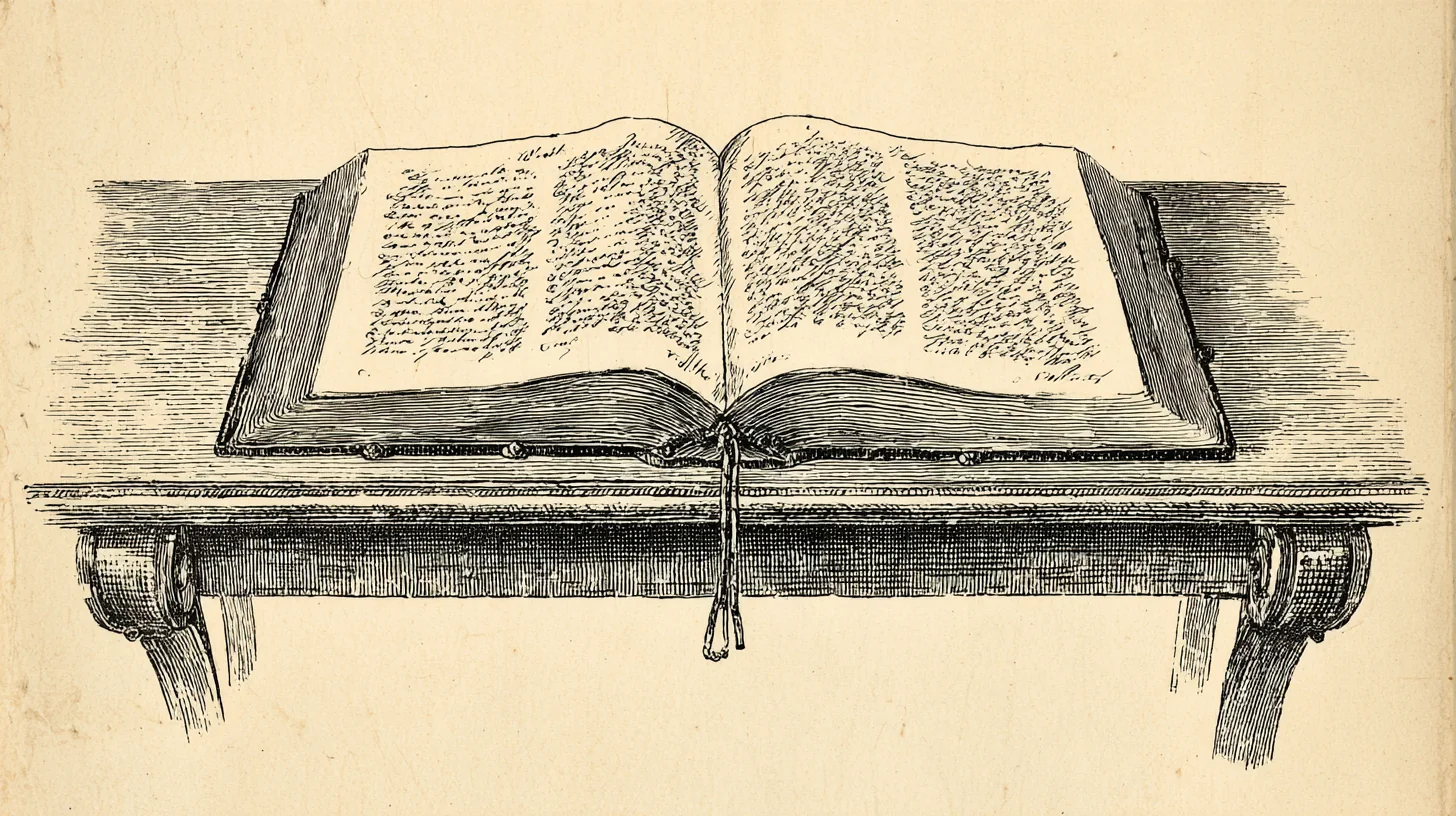
I have known Hollis Berridge since we were schoolboys, and I will say at the outset that there has never in all that time been a man more thoroughly suited to his own life. He kept a small house in a quiet street, a small income out of a family trust that had been quiet for three generations, and a small circle of friends who came to him at regular intervals and were treated, when they came, with the unobtrusive and entirely sincere hospitality of a man who has decided he does not very much wish to go anywhere himself but has no objection to being called upon. He read in the mornings, walked in the afternoons, and dined alone four nights in seven and in company the other three; and he had so arranged this life that the proportions of it required no further adjustment of any kind, and he proposed to live the rest of it on the same plan. That he did not is the subject of what follows, and I set it down as he gave it to me, in the order in which he gave it, because Berridge asked me to, and because a thing of this kind ought not to vanish merely because it would be inconvenient to the world to credit it.
The book came to him by the same path most of his furniture had come — by way of an aunt, a Miss Henrietta Berridge, who had occupied a narrow house on the south side of the town for the better part of fifty years and had died there at last in the manner she had lived: without bother to anyone and without consultation with the doctor she had outlasted. The estate was small and the relations few, and Berridge, being both the nearest and the most willing to come down for the inventory, had been left to dispose of the contents as he saw fit. Most of it he sent to the auction rooms. A few things he kept — a clock he had liked as a boy, a set of plates not worth the carriage but pleasant to remember her by, and, among a parcel of stationery oddments turned out of her desk, a guest book bound in dark green calf, much rubbed at the corners, with the word Visitors stamped in faded gilt across the front and a brass clasp that had long since ceased to clasp anything.
It is the sort of book that used, in such houses, to lie open on the hall table beside a small dish for cards. The earliest signatures in his aunt’s were from the eighteen-eighties; the last was perhaps a dozen years old, a curate she had once given tea to. Between these two dates were perhaps four hundred entries, in every variety of hand, each one a person who had crossed his aunt’s threshold and been thought sufficient to her hospitality to be invited to record the fact. Berridge took the book home, less out of any feeling for it than because he had reached the bottom of the parcel and saw no reason to throw it away, and he laid it on the side-table in his own small hall. He thought, with a passing pleasure in the thought, that he would begin a fresh page; that his own visitors might sign below where his aunt’s had signed, the line continuing through him as the line of clocks and plates and quiet trust incomes had continued through him; and that this was the modest sort of small ceremony a man in his circumstances might reasonably maintain. He turned to the first blank page after the curate, and he wrote in his own neat hand at the top of it the date, and his own name, and the words In residence, by way of opening the page. And he did no more with the book that evening, and went to his supper.
He came down the next morning, he told me, and his eye caught on the book before it caught on anything else, because there was a second entry on the page where last night there had been only his own.
It was below his, in the proper place; it was dated for that morning’s date; and it was in a confident sloping hand he had never seen in his life. The name written was Edwin Mark Pelham. He did not know any Edwin Mark Pelham. There was no card on the hall table, no caller’s hat upon the peg, no possible explanation a careful man could put forward for finding a stranger’s signature in a book that had stood overnight in a locked house. Berridge — and he was at pains, in the telling, that I should understand this — Berridge was not a man given to fanciful constructions. He took the book up and examined the ink and found it dry; he checked the front door and found it bolted as he had left it; he asked his housekeeper, when she came, whether anyone had called, and she said no one had, and he believed her, because she was a woman who would have mentioned a moth.
He set the book down again and resolved to think no more of it, which is the resolution men in his case always make and always immediately break. He thought a great deal of it. He thought of it through breakfast and through the morning’s reading, and at a little after eleven the bell rang, and the housekeeper went to the door, and there came into Berridge’s hall — apologising for the want of notice, with a letter of introduction from a man Berridge knew slightly in the country — a gentleman who gave his name, on being asked, as Edwin Mark Pelham.
Berridge held the visitor’s coat, he said, with hands that performed the office quite competently while the mind behind them stood at some considerable distance and watched. He showed Mr Pelham into the morning-room. He gave him sherry. He listened, with every appearance of attention, to the matter Mr Pelham had come about — a question of some old shares of his aunt’s that touched a charity Pelham administered — and concluded the business in a quarter of an hour, and then, in the calmest voice he could lay his tongue to, he asked Mr Pelham if he would be so good as to sign the visitor’s book in the hall on his way out.
Mr Pelham was, naturally, willing. He stood at the side-table; he took up the pen; and he wrote, in a confident sloping hand that Berridge already knew, exactly the entry that had been there since the morning. The same date. The same name. The same loop on the final m. He put down the pen and went away, and Berridge stood in the hall with the book in front of him and looked, on the open page, at the single signature — a single signature now, because the morning’s entry and the noon’s were not two entries but one, written once.
A Most Convenient Article
I will not pretend, and Berridge did not pretend, that the period that followed was anything but a pleasant one. A thing of this kind, when it is new, has a way of being its own sufficient justification, and the early weeks of the book’s working were perhaps the happiest of his middle life.
For it worked, very plainly, by a single rule. The book wrote, in advance, the entry of the next person who would cross his threshold. Sometimes it wrote in the early hours, before he came down; sometimes — he discovered, by going out to the hall at odd intervals — it wrote in the moments after some hidden mechanism in the world had settled who the next caller was to be, which might be a quarter of an hour or several days before the call itself. The hand was always the visitor’s own. The date was always correct. He had only to come down each morning, glance at the book, and know whether to expect anyone; and if anyone was expected, who; and, by the date set against the name, when.
The conveniences of this were considerable, and he availed himself of them. He had cake in the house when his cousin came up unannounced, because the book had told him she was coming; he had the small private collection of architectural prints already laid out on the morning-room table when Crowther, who cared for such things, called by on a whim; he had decanted the better claret an hour before the bishop, who was no friend of his but the friend of a friend, found himself unexpectedly in the neighbourhood. The bishop went away saying that Berridge was a man of remarkable readiness, and the saying of it travelled. Berridge began, in a small way, to be sought out. The note in people’s voices, when they spoke of him, acquired the particular warmth a host’s name acquires when a man can say of him that he has never once been caught wanting. He was, in short, found hospitable; and he had not had to alter, for the sake of being found hospitable, a single one of his comfortable habits, since he had now to alter nothing in haste and could alter everything in good time.
He took, also, an interest in the simpler pleasure of foreknowledge for its own sake — standing by the table of a morning before any caller had arrived and spending an idle quarter-hour wondering what the bearer of an unknown name would look like, whether his business would be brisk or long. The book never told him what the call would be about; only that it would happen, and who. The rest was left to the hour itself, and he found, perhaps to his own faint surprise, that it was left genuinely. The man who came to the door at three was not less interesting because Berridge had known since seven that he was coming. He brought his own news. He brought his own face. The book had not, as Berridge put it to me with some satisfaction in that first telling, taken the day. It had only prepared him for it.
This went on, by his reckoning, a little over four months. He recorded, in those four months, perhaps thirty signatures in advance of their visits, and not one of them had failed.
The Name That Did Not Come
The first thing that troubled him, he told me, was not a signature that failed but a signature that he could not place.
It appeared on a Wednesday in the autumn. He came down, glanced at the book, and saw written in the morning’s place, in a careful schoolmasterish hand, the name Thomas Carrick. He did not know any Thomas Carrick. This in itself was not alarming — he had not known Pelham either, and a number of the names since had been new to him — and he went about his morning expecting, as before, that the door would open in due course upon a stranger.
The door did not open. No one came that day. No one came the next, either, nor the next. Berridge watched the book in some perplexity. The entry remained where it was, dated for the Wednesday, the ink quite ordinary; nothing else appeared above or below it; and at the end of a week he was obliged to set it down, with whatever feelings, as the first instance in which the book had been wrong.
He thought of it as the first instance, that is, for the better part of a fortnight. Then, on a Tuesday evening, he came into his hall by the back stair to take down a book of his aunt’s letters, and as he passed the side-table he saw — without at first understanding what he was seeing — that on the cover of an envelope lying there, addressed to him in a hand he had been about to open, was the name of the sender printed in small black type above the seal. The sender was a firm of country solicitors. The signing partner was a Mr Thomas Carrick. The envelope had been delivered by the second post on the very Wednesday the visitor’s book had written his name; Berridge had carried it through to the morning-room, had read its contents and answered them, and had laid the envelope back on the side-table, where it had stayed, because he was not a man who threw papers away promptly. He had answered Mr Carrick’s enquiry in writing, and Mr Carrick had never set foot in the house.
Berridge stood with the envelope in one hand and the visitor’s book open in the other, he told me, and he understood for the first time that he had been mistaken about what the book did.
It did not record the people who would walk into his hall. It recorded — and he saw this with a slow and disagreeable clarity — the people who would, on that day, cross his threshold in some sense. A letter, lying on his hall table from breakfast to bedtime, had counted. A man whose name had passed under his eye and whose words had occupied his attention for an hour together, though that man had been forty miles off and would never come within forty of him, had counted. The book’s threshold was not the door. The book’s threshold was something a great deal harder to draw a line round; and Berridge had been keeping, with a comfortable inattention, only the most outward and bodily account of his own borders, while the book had been keeping a longer and less merciful one.
He sat down in the hall, he said, and turned slowly back through the four months’ pages, and found that he had been quietly wrong about a number of them. There was a name he had read as a caller’s, and which was now on examination the unmistakable hand of a clergyman whose long telegram of condolence had arrived that afternoon and been read in the hall before he carried it through to the fire. There was an entry he had taken pride in answering with claret: the bishop had crossed his threshold, indeed, but he had crossed it twice by the book’s reckoning — once on the day of the wine, and once, more quietly, a week earlier, when his pastoral letter had been read aloud at Berridge’s breakfast. He had crossed several of these names off, in his own hand, as failures of the book; he saw now that none of them had been failures of any kind. The book had been faithful. He had been reading it by the wrong measure.
A man, Berridge said to me, accumulates an immense number of small visitors in the course of a quiet life, and does not, for the most part, notice them; and a book that counts every one of them is a book that knows him a great deal more intimately than he knows himself.
What the Threshold Was
It was after this, he told me, that he stopped sleeping well.
He continued, for some time, to come down each morning and look at the book; he could not bring himself not to look. But what he was looking for had altered. He was no longer reading the page to see who would knock at the door. He was reading it to see what the day intended to be allowed to reach him. The book had revealed itself as a kind of register of admissions, and the keeping of the register was not in his hands; and a man who has come to understand that someone, or something, somewhere is keeping a register of every person and every voice that he permits across the inner boundary of his attention does not easily resume his old comfortable opinion of the privacy of his own house.
He began to notice, as he had not noticed before, how many names a quiet life in fact admits. He read a great deal — most reclusive men do — and every author he opened was, by the book’s reckoning, a visitor; he took newspapers and telegrams and letters, and the writers of leaders and the senders of bills came in with them; he thought, late in the evening, of friends not heard from in years, and the thought itself, he came at last to suspect, was a small door opened upon them through which the book counted them as having passed. He took, for the better part of a fortnight, a private inventory of his admissions; and the count, even on his most retired days, ran into the dozens. He saw then that his solitude, which he had always considered a settled and well-defended thing, had been throughout his life a very crowded room indeed; and that the only difference the book had introduced was that someone was, at last, keeping the list.
There was no consolation in the discovery. The book, he came to see, did not merely record; it chose. It chose, by some rule he could not work out, which of his day’s many admissions to set down and which to let go unrecorded; and the choosing was a judgement, and the judgement was not his. There were names it wrote in a fine round hand and gave precedence on the page; there were names it set down small, and at the foot, as though apologising for them; there were people he had thought himself close to whose names appeared only after long absence, and others he had hardly given thought to whose names recurred and recurred. He saw himself, gradually, through the book’s eye — not as the host of a few particular friendships, conducted on the front step, but as the keeper of a long and uneven account in which he was creditor and debtor by turns to a hundred presences he had never properly examined. And he was ashamed of the account.
I think this is the part he found hardest to give me. The book’s register was not a list of merely external doings; it was a list of where his attention had really gone. The friends to whom he was hospitable in the matter of cake and claret appeared in a small careful hand, as though the book agreed with him in counting them; but it also recorded, in larger and freer letters, the people he had not invited and would not have admitted at his door and yet had let in by some softer entrance — strangers whose books he had argued with at midnight, dead men he kept up quarrels with, women he had never spoken to who lived in his afternoons. The book did not judge these admissions; it merely noticed them, and the noticing was unanswerable, because the hand each one was set down in was the person’s own.
The Last Entry
He did not, he told me, ever consider destroying the book. He had thought of it, naturally; one entertains the thought, in such a case, as a man entertains the thought of the doctor he will not see. But he found that he could not. The book was, by then, the only honest history he possessed of his own days, and a man does not burn the only honest history he possesses, however poorly it flatters him. He thought, at one period, of locking it away, but he understood that the locking away would alter nothing — the book would write whether he watched it or not, and not to watch was merely to be the last of his own visitors to know who had been admitted.
He left it on the side-table.
I saw him in the spring. He had grown thinner, in the way men of his temperament grow thinner — without any loss of order, with the same neat collar and the same neat conversation, but with the bones of the face become a little nearer to the surface, as though the man inside were standing a step closer to the window. We spoke of his aunt, and the prints, and a small matter about my own affairs in which he was kind enough to take an interest. As I was leaving he asked me, with a particular gentleness, to come and sit with him in the hall for a moment, and I went, and he opened the book.
He had not turned to the morning’s page. He had turned to a page some way forward — three weeks forward, by the date written at its head, in his own hand — and on that page, beneath the date, there was a single entry. It had been written, plainly and without flourish, in a hand I knew at once, because I had seen it on the flyleaf of every book Berridge had ever lent me. The name was his own. The date was a Tuesday morning some weeks ahead. There was no other entry on the page, and the rest of the book, when he leafed through it for me, was blank from the present day to that one and blank thereafter.
He shut the book carefully and put it back on the table, and he asked me, in a level and quite unrhetorical voice, what I thought it meant. I tried to give him the comfortable interpretations — that it was the date of some long journey, some final shutting of his own door behind him, some particular and ordinary admission of himself into his own house after an absence. He let me give them. He did not contradict any of them. He thanked me, with the same particular gentleness, for having tried.
I went home, and I did not write to him for some days, because I did not know what to write that would not be insulting either to him or to the book. On the Wednesday after the date he had shown me, his housekeeper sent me a note. He had been found in the morning-room, in his chair, with the book open on the table beside him at the page on which his name had stood three weeks; and the page, the housekeeper said, in the particular flat steady tone in which her short letter was set down throughout, was now empty. The entry was gone. There was no mark where the writing had been. The hand, having at last crossed the threshold it had been waiting to cross, had taken its signature with it; and the page was as clean and as unwritten as the rest of the book that lay ahead of it, and would lie ahead of it, and would no longer be opened by anyone.
I have set this down as he asked me to, and as exactly as I am able. The book is in my keeping now. He left it me by a clause in his will, with a small note in his own hand asking me not to open it on any blank page and not to attempt to begin a fresh one of my own; and I have honoured both requests, and propose to go on honouring them, because I have spent a part of every week since trying not to think about the visitors my own quiet life admits, and I am not yet ready to know which of them a book in my hall would think it worth its while to write down.